1a. Microphone
What's the best mic for every budget?
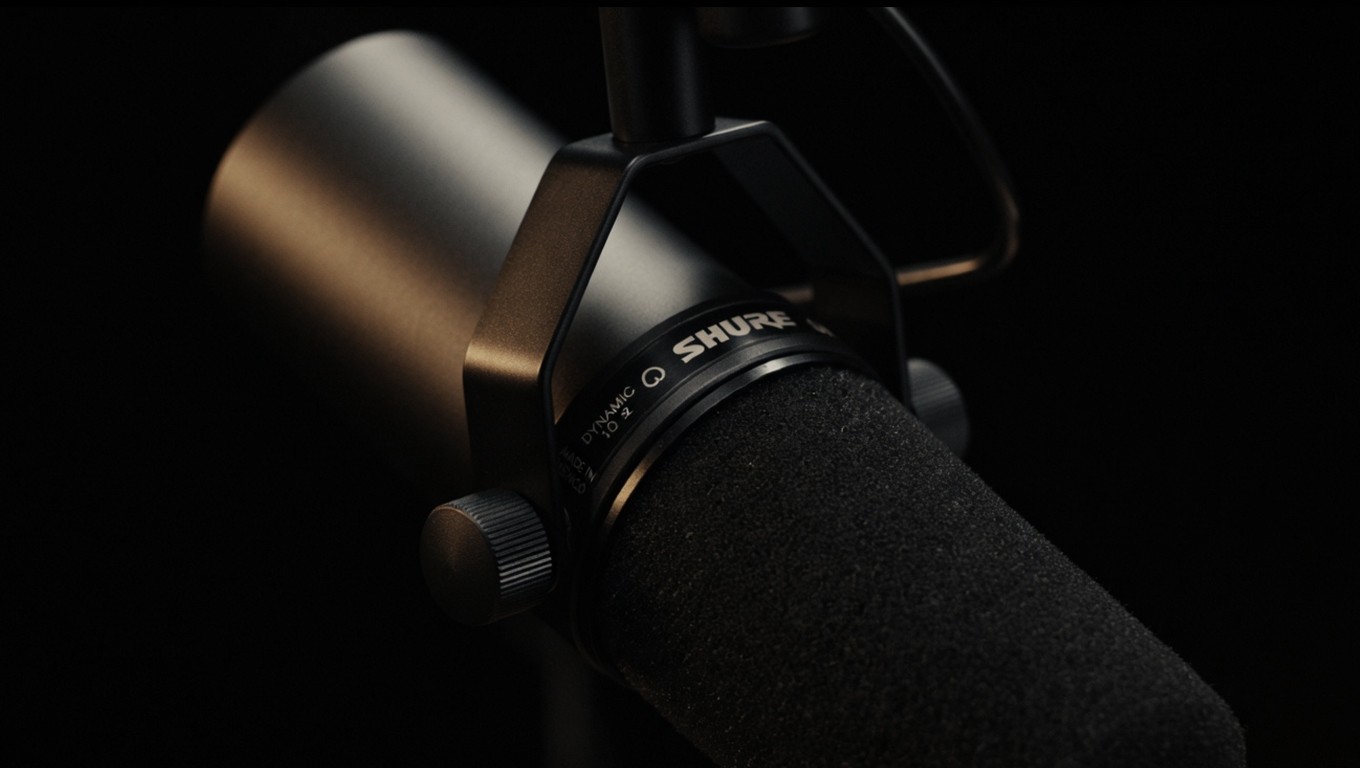
Entry level: Rode PodMic. Mid range: Rode Procaster. Premium: Shure SM7B. All three are dynamic microphones, which is intentional. Dynamic mics are the right choice for most home studio environments.
Dynamic vs. condenser—which should I use?
Dynamic microphones are more rugged, more durable, easier to use, and naturally help eliminate echo and room reverb. For a home studio where acoustic treatment may not be perfect, dynamic is almost always the right call.
Directional mic types: omni vs. shotgun vs. cardioid?
Cardioid and shotgun, always. Cardioid is my standard for seated studio recording—it picks up directly in front and rejects the sides and rear. Shotgun works well depending on room acoustics and setup distance. Omni picks up everything, which is almost never what you want in a home environment.
XLR vs. USB—which is better?
XLR for quality, almost always. USB is a last resort—acceptable in an emergency but not a long-term solution for professional content.
What audio interface should I use?
Focusrite Scarlett Solo for a clean, reliable, budget-conscious setup. Rodecaster Video Core if you want an all-in-one solution with built-in mixing and 1080p video output.
Wireless vs. wired for lavalier mics?
Wireless. The DJI Mic system is my recommendation. One caveat: in rooms with many phones or wireless devices, you may experience occasional feedback or interference.
Where should I place my mic?
Cardioid mic, 6 to 12 inches from your mouth. Angle it at 45 to 90 degrees—never point it directly at your mouth, which causes plosives. Position it under your chin to keep it off camera.
Boom arm vs. desk stand—which is better?
Both are solid options. The main downside of a desk stand is that it can pick up vibrations if you have a habit of hitting or slamming your desk. Keep that in mind.
Why does a shock mount matter?
A shock mount isolates the mic from physical vibrations transmitted through the desk or stand. If you're getting low rumbles or handling noise in your recordings, a shock mount eliminates it.
Pop filter vs. windscreen—which do I need?
Pop filter, always, for studio recording. It stops the burst of air from plosive sounds (P, B, T) from distorting your recording. This is good especially for those who have a podcast with multiple guests. Windscreens are designed for vocal booth use—not the standard for a studio setup.
Where should I place a lavalier mic?
On your shirt, pointing toward your mouth. On a hat, pointing downward. Never place it inside your clothing. Fabric rubbing against the capsule will ruin the recording.
How do I eliminate latency in OBS?
In OBS, change your audio buffer to milliseconds and set it to 500. That's it.
What XLR cables should I buy?
Mogami or Canare, always. The cable is the last place to cut costs in a professional signal chain.
What is phantom power and when do I need it?
Phantom power (48V) is required when using a condenser microphone or when pairing an SM7B with a Cloudlifter. The Cloudlifter boosts the SM7B's low output signal before it hits your interface.
How should I set my gain levels?
Target between -12dB and -8dB on your input. Staying in this range gives you clean headroom and prevents clipping. This is the most important setting to get right before you hit record.
How do I avoid clipping?
Set your gain to -12dB to -8dB before you start recording. Everything downstream depends on this being right. You can add a compressor & limiter as well.
What sample rate and bit depth should I record at?
48kHz and 24-bit is the standard for social media and video content. It's the sweet spot between file size and quality.
How do I reduce reverb and echo in my recordings?
Acoustic panels are the real fix, but you can also reduce echo by speaking away from bare walls, adding furniture, and placing soft materials in the room. Hard, parallel surfaces are the enemy.
What do compressors and noise suppression actually do?
A compressor levels out your volume—it catches the loud peaks and keeps your audio consistent. Noise suppression filters out background noise like fans, HVAC, or keyboard clicks. Both are essential in post-production and in live recording chains.
Should I use AI tools to improve my audio?
It's an option, but AI audio enhancement is noticeably digital if overused. The best tool in this category is Adobe Podcast. Use it as a last resort, not a replacement for good source audio.
What is a cardioid polar pattern?
Visually, it looks like a heart or pear shape—it picks up sound from directly in front of the mic and rejects sound from the sides and rear. It's the most common and useful pattern for solo studio recording.
Room treatment vs. acoustic panels vs. moving blankets—what's the difference?
Full room treatment (built-in acoustic construction) gives the best results but costs the most. Acoustic panels are my preference—they're effective, look intentional, and can enhance the aesthetic of your studio. Moving blankets are a hard no: they absorb minimally, look terrible, and kill the performance energy of the space.
What do I do if I can't treat my room acoustically?
Record outdoors. A treated outdoor space will almost always outperform an untreated indoor room. Don't try to fix it in post—fix the source.
Hard vs. soft surfaces—how does it affect my audio?
Hard surfaces (concrete, glass, bare wood) reflect sound and increase reverb. Soft surfaces (panels, rugs, curtains, furniture) absorb sound and reduce it. The more soft materials in your space, the cleaner your recordings.
Which mic works best for all voice types?
The Rode PodMic. It's the most versatile dynamic mic at its price point—it handles bright voices, dark voices, and everything in between without needing heavy EQ correction.
1b. Acoustics
Foam vs. acoustic panels—which actually works?
Acoustic panels, always. Foam does very little for meaningful sound treatment and looks amateurish. Panels are effective, they look intentional, and they can actually enhance the aesthetic of your studio.
What are bass traps and do I need them?
Bass traps absorb low-frequency sound that builds up in corners. They're most relevant in larger rooms or spaces with noticeable low-end muddiness. For a standard home studio, they're a nice addition but not essential.
Diffusion vs. absorption—what's the difference?
Absorption sucks sound in—it eliminates reflections. Diffusion scatters sound in different directions—it reduces harsh reflections without making the room feel completely dead. Most well-designed studios use both.
Should I add a cloud panel above my desk?
If you can do it, yes. A ceiling panel directly above your recording position is one of the most effective acoustic improvements you can make—it eliminates early reflections from above before they reach the mic.
Where should I place my acoustic panels?
Directly across from you and on both sides at the first reflection points—where sound from your voice bounces off the wall before reaching the mic. These three positions give you the most return on your investment.
How do I identify echo in my room?
Clap once loudly in the center of the room and listen. If you hear a rapid, metallic-sounding decay after the clap, that's flutter echo caused by parallel reflective surfaces. You can also test by speaking loudly near bare walls.
How do I deal with background noise—HVAC, traffic, neighbors?
For HVAC, relocate the vent or use a directional deflector to redirect airflow away from the recording area. For traffic and neighbors, door and window sealing combined with mass-loaded vinyl on walls makes the biggest difference.
What's the difference between soundproofing and sound treatment?
This is one of the most misunderstood concepts in home studio design. Sound treatment improves the quality of sound inside the room—it reduces echo, reverb, and reflections. Soundproofing prevents sound from entering or leaving the room. Acoustic panels treat. Mass loaded vinyl and sealed doors soundproof. You need to know which problem you're solving before you spend money.
Do rugs and carpet help with acoustics?
Yes. Hard floors (concrete, hardwood, tile) reflect sound upward and increase reverb in the room. A rug under your desk and recording position absorbs floor reflections and is one of the cheapest acoustic improvements you can make.
Can curtains and drapes function as acoustic treatment?
Yes—heavy curtains add meaningful absorption, especially on large windows that would otherwise act as reflective surfaces. They won't replace panels, but they contribute to the overall treatment of the space.
Can a bookshelf function as a diffuser?
Yes. A bookshelf filled with books of varying sizes and depths scatters sound in multiple directions, functioning as a natural diffuser. It's one of the reasons a bookshelf in frame is both a credibility signal and an acoustic asset.
Does furniture help with acoustics?
Absolutely. Sofas, chairs, and upholstered pieces all absorb sound. A furnished room will always record better than an empty one. Furniture is acoustic treatment you don't have to install.
Recording booth vs. treated room—which is better?
A well-treated room is almost always preferable to a recording booth for video content. A booth isolates you from the room but also isolates you from your visual environment—which matters for studio presence and brand.
Can I record in a closet?
Yes. A closet filled with hanging clothes is one of the most naturally treated small spaces in a home. It's a legitimate solution for audio-only content or voiceover work when a full studio setup isn't available.
Does sealing doors and windows make a real difference?
Yes. Gaps under doors and around windows are where external noise enters. Acoustic door sweeps and window seals are low-cost fixes that make a measurable difference in background noise reduction.