What's the best lighting for each budget?
Entry level: Neewer CB60B. Mid range: Amaran Halo 100x. Premium: Amaran Halo 300x. You don't need to spend thousands to look professional. You just need to spend wisely on one great key light before anything else.
LED panel vs. LED stick vs. studio light vs. ring light. which should I use?
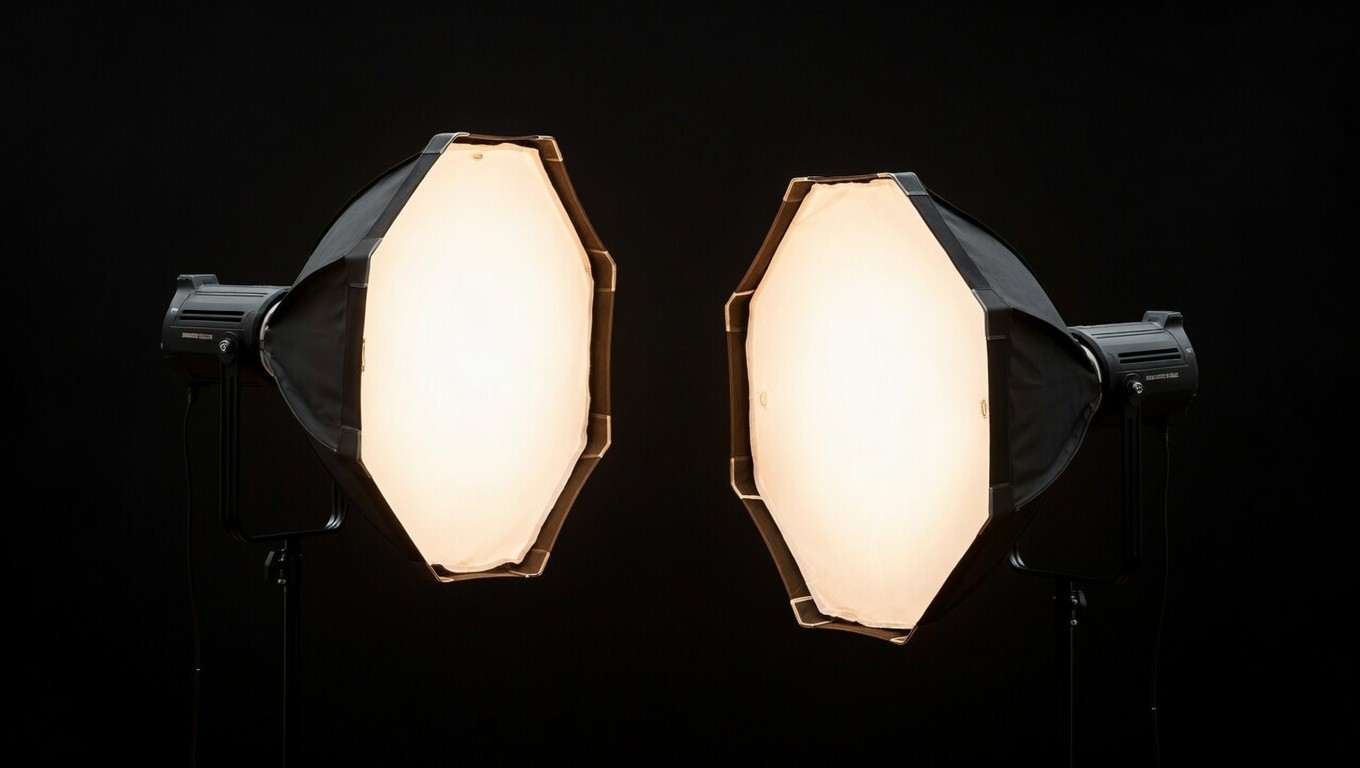
A round LED panel works if you're tight on space, but it typically produces a harder, less flattering look. An LED stick should only be used for background depth and backdrop enhancement—not as a key light. A studio light with a soft box, is professional tier and the standard I recommend. A ring light is inconsistent: it creates hard shadows, puts a ring reflection directly in your eye, and offers no real softening. Avoid it.
Light vs. heavy studio lighting—which is better for a home studio?
Today's lightweight studio lights are easier to install, take up less space, and many connect via Bluetooth for convenient dimming. The Amaran Halo 300x on a varipole is a perfect example.
Varipole vs. light stand—what's the difference?
A varipole (floor-to-ceiling tension pole) takes up no floor space, which matters in a home studio. If you go with a light stand, look for ones with a flat, round base rather than a wide tripod foot—it reduces the space significantly.
3-point lighting vs. 2-point lighting?
3-point lighting is the standard for cinematic, polished content. 2-point works well for emotion-driven content like motivational videos, confessional-style posts—where a slightly moodier, less produced look actually serves the message.
What's the correct lighting angle?
I recommend positioning your key light at the 2 o'clock or 10 o’clock position. This creates natural shadow dimension and prevents the flat, washed-out look coming from in front or ceiling.
How far away should my light be, and how high?
4 to 8 is a good range. A larger softbox paired with a closer distance gives you the softest, most flattering shadows. The light should sit above head, enough to angle down naturally without creating dark under-eye shadows.
Grid vs. no grid — when do I use each?
Skip the grid if you want your background to be visible and evenly lit. Use a grid when you want to focus all light on your subject, create a more dramatic, emotional look, and prevent spill onto the walls. I enjoy using a grid with led light strip behind me.
What softbox size should I use?
Generally 20 to 30 inches is the sweet spot for solo studio content. Large enough to wrap light softly around your face without taking over the room.
How do I achieve rim or hair lighting in a home office studio?
Mount or magnetize a small LED light to the ceiling behind you, aimed at the back of your head and shoulders. It doesn't need to be powerful—its job is simply to separate you from the background and add depth.
Split lighting vs. Rembrandt vs. butterfly — which do I use?
For studio content, I use edge lighting only: main key at 2 o'clock, secondary fill at 10 o'clock. It's clean, dimensional, and works for both authority content and emotional storytelling.
Bounce vs. direct light—which is better?
Direct lighting. Adding bounce cards and reflectors is unnecessary gear complexity for a home or office studio. Invest in a quality softbox instead—it achieves the same diffusion with less setup.
How does color temperature affect the look and feel of my content?
5000K to 5200K is the standard I use across all my builds. It's clean, neutral, and consistent. It reads as professional without feeling cold or clinical.
How do I match light color consistency across my setup?
Match your camera white balance settings to your light's color temperature. If your key light is at 5000K, set your camera to 5000K. Consistency across all sources eliminates unwanted color casts in post.
How does lighting affect skin tone by complexion?
For darker skin tones, use slightly warmer light—around 4800K to 5000K. It prevents underexposure and brings out richness in the skin. For lighter skin tones, lean cooler—5000K to 5200K to avoid overexposure and maintain clarity.
Should I ever use ceiling lights or a ring light for content?
Never use ceiling lights for content. They cast harsh downward shadows that age your face and flatten your look. Ring lights are inconsistent, create a visible ring reflection in your eyes, and offer no real control over shadow. Neither belongs in a professional studio setup.
Dark vs. light backgrounds?
A dark background is bold and powerful—it commands attention and positions you as someone serious. A light background reads as calm and inviting. Neither is wrong; choose based on the emotion you want your content to trigger.
How do I use practical lights as brand elements?
4200K, 1-watt bulbs are aesthetically clean and warm without being distracting. Minimal ceiling accent lights pointing at wall art also work well. They add intentional depth to the frame without screaming "set design."
How do I handle window light in a studio setup?
Eliminate it entirely with blackout blinds. Natural light is unpredictable. It changes throughout the day, conflicts with your artificial light's color temperature, and creates continuity problems across your content.