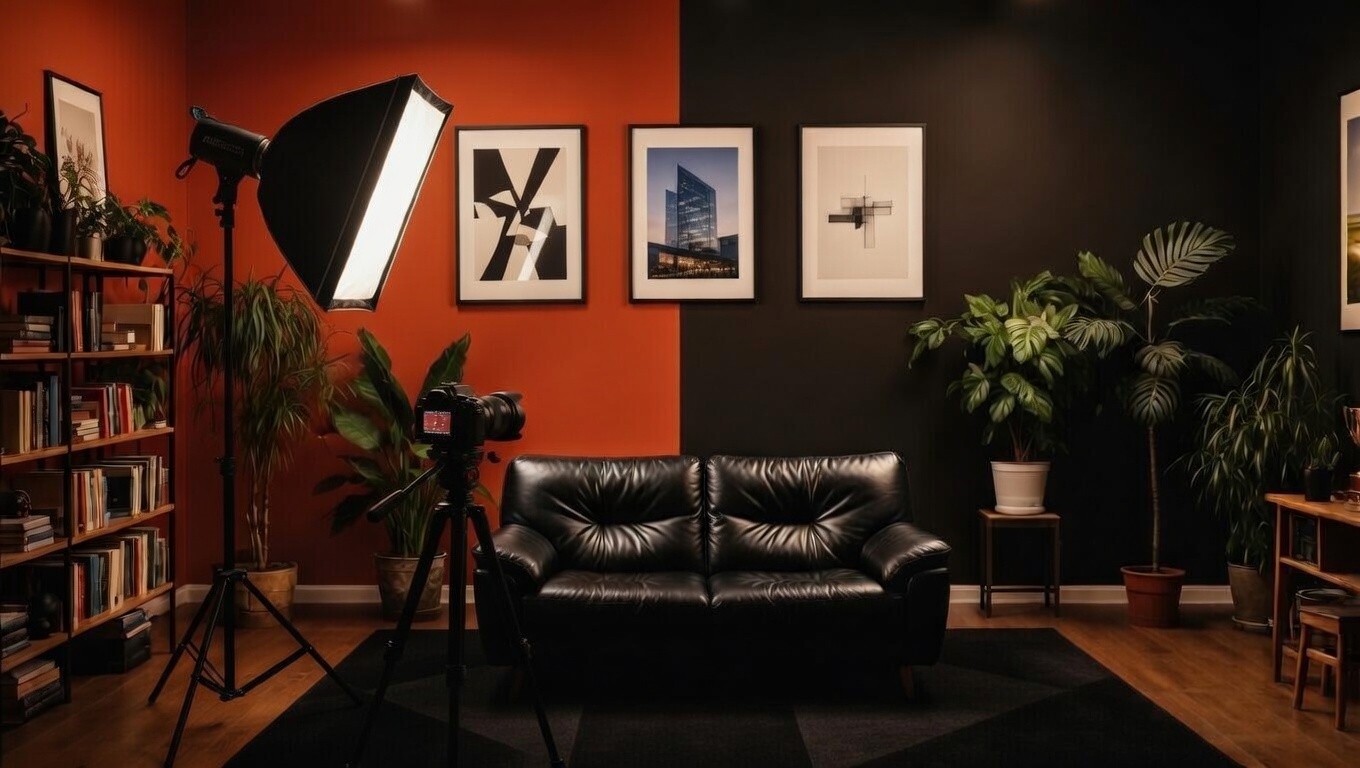
How does wall color affect the psychology of my content?
Color directly influences how viewers feel while watching you. It signals emotion before you say a word—power, wealth, creativity, calm. Your wall color is a subconscious trigger. Choose it with intention.
Can I use multiple wall colors in a studio?
Yes—multiple colors bring contrast and character to the frame. The key is keeping them within a cohesive palette so the space feels designed, not chaotic.
How important is color palette consistency across my content?
I'd rate it an 8 out of 10. Think of it like your personal style—you wouldn't dress in a completely different aesthetic every day without confusing people. Your visual palette is your brand's clothing. Stay consistent.
How do textures like brick, wood, and fabric communicate in a frame?
Brick reads as bold and urban. Wood reads as creative and grounded. Velvet reads as wealth and luxury. Whatever you choose, keep it consistent—mixing too many textures creates visual noise.
How do lighting and wall color interact?
Your light source amplifies whatever color is on your walls. A warm light on a colored wall shifts the entire frame's tone. This is why your softbox placement and accent lights need to be designed alongside your wall color, not separately.
Dark vs. light background—which communicates more authority?
Dark is bold and powerful—it commands the frame. Light is calm and inviting. Neither is wrong. Choose based on the emotion you want to trigger in your audience before you say a single word.
What is depth layering and why does it matter?
Depth layering means designing your foreground, midground, and background as three distinct visual zones. When done well, it creates a frame that feels rich and intentional—your eye moves through the image rather than landing flat on a wall.
Why does negative space matter on camera?
Less clutter means fewer distractions. Negative space directs the viewer's eye to you—the subject. It also creates room for text overlays and captions without the frame feeling crowded.
What do trophies, awards, instruments, and personal objects do for a brand?
They build trust and relatability simultaneously. They show proof that you've lived something, built something, earned something. They make your brand human before the viewer even hears your voice.
What does a bookshelf in the background signal?
That you invest in knowledge. A well-styled bookshelf is one of the most effective credibility signals you can put in a frame—and it costs nothing if you already own books.
Props vs. clutter—where's the line?
Intentional objects tell a story. Clutter creates chaos. If something in your frame doesn't have a reason to be there, it's visual noise. Every object should earn its place.
Should I put my logo in frame?
Yes—logo and brand placement in the background is great for brand recognition and business association. It reinforces who you are every time someone screenshots or shares your content.
What does your desk setup communicate?
That you're serious. A clean, intentional desk setup signals that you take your work—and your brand—seriously. It's one of the first things a potential client notices.
Do neon signs and LED strips help or hurt credibility?
They can work if dimmable and used intentionally. At full brightness, they tend to distract from the subject and can cheapen the look of a professional studio.
Should I use a monitor as a background element?
Generally no. A bright screen in the background competes with your face for attention and can create exposure problems for your camera. Keep background elements passive, not active.
What about seasonal or holiday decor in the studio?
This is actually a great idea. Holiday decor and subtle theme changes keep your content feeling current and human. It shows that your studio is a living, breathing space, not a static set.
How do plants, rugs, and furniture contribute to a studio?
Beyond aesthetics, they're functional. Soft materials like rugs and upholstered furniture absorb sound, reduce echo, and improve your recordings. Plants add life to the frame. It's form and function working together.
Why does cable management matter?
A clean, organized setup is better for your mental state and creative energy. Chaos in your environment bleeds into your performance on camera.
How should I handle windows in a studio?
Eliminate natural light with blackout blinds. Natural light is unpredictable, changes color temperature throughout the day, and will fight your artificial lighting setup.